
How to rewild a landscape through design
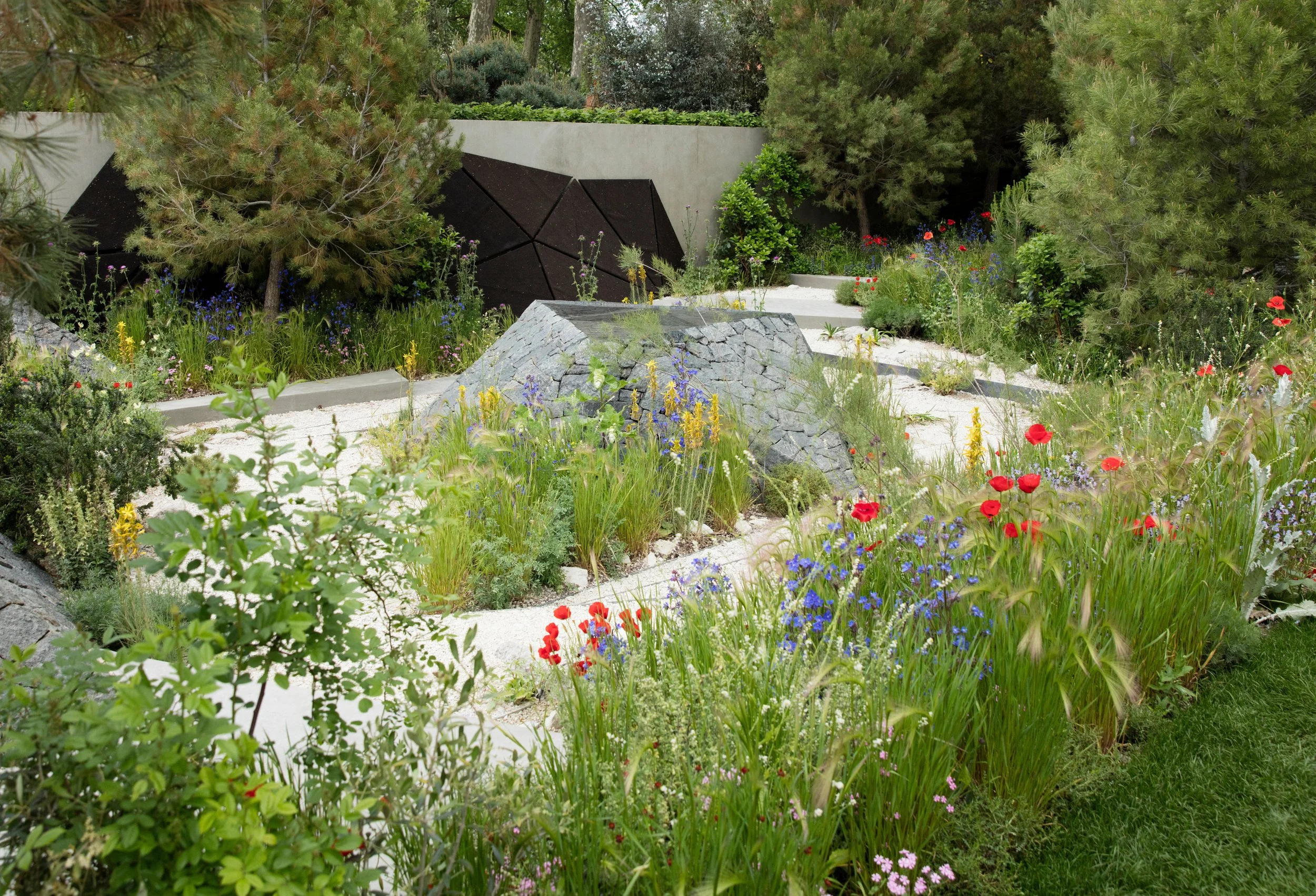
Manicured outdoor spaces are quickly becoming outdated. More and more people are lusting after wild, blooming and thriving natural spaces, understanding the benefits of nature in its fullest form.
Below we would like to share some of the ways in which garden designers, landscape architects, and landowners can embark upon a wilding approach, joining the rapidly expanding movement to rewild Britain.
Where to begin
Rewilding a landscape through design takes a contrasting approach to traditional design projects. While typically the site might be cleared of most or all vegetation, retaining only one or two so-called ‘specimen trees’, and the space being morphed to fit a specific design, rewilding requires the exact opposite.
Design is led by a more harmonious approach, utilising and integrating the existing landscape resources and encompassing the immediate landscape and its surrounding environments.
Site assessment
To rewild your garden, whether small scale or larger estates, assessment is the crucial first step. Site surveying includes assessment of the surrounding landscape ecology and topography, considering any local woodland, climate hydrology, soil health and flora, fauna and funga.
This data can then holistically be considered during the design phase, ensuring as much on-site resource is utilised, and additional requirements can then be incorporated into the new layout.
This doesn’t mean that your entire space has to be one wild meadow, but a dynamic landscape including all aspects of an outdoor design that suit your needs while optimising natural processes.
Water as the source
At TreeSource, we believe that water is one of the most crucial elements to start with when establishing landscape architecture for rewilding.
A key thing is to look at any surrounding, or the introduction of, natural bodies of water. If you have a body of water, ideally with movement, then you attract wildlife including birds, bees and other pollinators.
Minimal maintenance for maximum output
Perhaps a relief for most, rewilding a garden is an approach that requires minimal input for maximum return. This means that the less an outdoor space is tampered with and decimated, then the better chance the land gets to bloom into a wild haven.
By rushing into implementation, there’s a risk of more long-term problems arising. Hastily thinning trees, for example, can result in gradual tree failure, something not always seen until up to three years later.
By gentle assessment, you can design a low input garden that provides maximum return, preventing unnecessary and costly expenditure, too.
Key ingredients to a wonderful, wild garden
There are some key aspects that can help to materialise your harmonious rewilding vision, marrying visual design with natural planning.
Starting with soil
As the basis on which all things grow, soil is a crucial foundation for life to thrive. When working with a landscape architect, the first step is often clearance, however, clearing your land is one of the most detrimental things you can do.
Stripping a landscape bare in order to put it back together will not work for a rewilding approach. Soil biology is also a very delicate component of a garden ecosystem. It’s something that can so quickly be ruined by the arrival of landscaping machinery, yet takes a much longer time to restore.
Your ideal landscape design team will be able to conduct soil assessments, understanding the health of the soil on your land whist knowing how to best protect it from compaction during the garden construction phase.
If the existing soil is teaming with life, including important fungal networks and bacteria, then this is a great basis to begin growing. If the soil is somewhat deserted, then putting life back into it – through compost teas such as our own! - is the next best step.
Planting trees to create a microclimate
Establishing a microclimate will help life to really thrive on your land. This can be achieved through planting trees, which create windbreaks and provide shade.
A multi-strata design will create layers of shrubbery and vegetation for wildlife to enjoy. This self-sustaining tree planting design can also accommodate a supply of fruit and nuts for other fauna – and client! - to enjoy.
Planting trees to regulate climate offers both shaded and gladed areas, creates flight paths and is generally very inviting for wildlife. Here not only can biodiversity develop, but people can enjoy a beautiful, dynamic woodland to roam.
Transplanting neighbouring trees
There’s a lot trees can do to enhance wilding initiatives for garden design. Matured trees can offer all-important carbon sequestration benefits, but they also scope beyond this.
Implementing trees as part of a rewilding design has multiple benefits:
Nurture biodiversity, providing homes, shelter and food for various wildlife
Provide windbreaks for protection against the elements
Are virtuous towards human health and wellbeing
Are striking statues of nature that can be enjoyed by landowner and visitors alike!
Can provide fruit for clients to enjoy at their leisure, or use for additional revenue streams
Help to regulate temperature and create microclimates, suitable for flora, fauna and people.
The best way to implement trees for rewilding? Transplanting neighbouring trees.
If there’s woodland nearby where trees need to be thinned, instead of felling them, these trees can be thinned and brought into your outdoor space. They can be repurposed, not wasted, and are probably the best trees to be using. This is not only cost saving, but takes advantage of sustainable localised tree planting and translocation.
Create a body of water
If you don’t have the advantage of water on site, then creating a space for this natural element will help fast track your wilding vision.
Water is excellent for wildlife and it’s good for us, too. From the sound of moving water to being able to dip our toe in, a body of water is relaxing and remediating.
If you want a natural water system to swim in, you need the maximum amount of life – including plants and insects – for it to be clean and in balance. So, water is as important to life as life is to water! In an ideal world, a spring is the best quality water to have in a garden when using a rewilding approach to design.
Marginal planting
Any body of water, whether naturally occurring or built as part of your rewilding plan, can be better wilded using marginal planting. Marginal plants such as swamp lilies, marsh marigolds, rough horsetail, cypress root and dwarf bullrush help to purify the water and keep it ecologically balanced.
Not only do these plants add a beautiful aesthetic, but they can help keep algae at bay, provide shelter for wildlife, shade for any aquatic life, and if the flowering kind, can attract pollinators.
Pollinators
Water will help attract pollinators to the garden giving them vital hydration to survive. Next on the agenda for pollinators would be flowers.
Planting flowers that are different shapes, scents, colours, varieties and species will give you the best chance of attracting as many butterflies, bees, moths and other kinds of native pollinating insects as possible.
Blurring the lines
As part of a rewilding vision, we need to look at reducing rigid frameworks for gardens and outdoor spaces. It’s time to reimagine designs, implementing sinuous planting as opposed to perfectly manicured and linear structures.
Wilding is not about controlling nature, but allowing its natural patterns to progress without intervention. By shifting mindsets, moving away from what the ‘perfect’ garden should look like, we can embrace rewilding in its most authentic form, giving your outdoor space a uniquely wild character.
This can be done while simultaneously delivering all aspects of an outdoor space that you might want, including areas for play and leisure, dining areas, swim spots, orchards, and much more.
Do you want to rewild your landscape?
Rewilding your garden or larger estate is an approach that is best not rushed. Through gentle assessment, planning and implementation, a wild space can begin to flourish in its own time. The most noteworthy, and perhaps counterintuitive, approach is to simply step back and let nature lead and support those processes.
Whether a landowner, a homeowner looking to rejuvenate your garden, or a landscape architect looking for rewilding solutions to partner with, TreeSource can help you execute a beautiful, nature-centred vision.
Get in touch with us today to find out more about our ecological, arboriculture and landscape design work.