
What is a pest? Making way for a mindset shift
“The key problem, from which all others follow, is its foundation in the premise that organisms can be regarded as fully separate material objects, dislocated from the common space of their environmental ground.”
The Royal Horticultural Society have recently decided to reclassify slugs, the nemesis of many a gardener. This change moves away from categorising them as pests. They have been recognised by the charity as significant to a healthy ecosystem and play “an important role in planet friendly gardening”.
This mindset shift is an opportunity to engage in a wider consideration around pests, the real benefits they bring to ecosystems and their relevance in solving the biodiversity crisis. In this blog, we’ll be looking at some of the most common garden pests and why their eradication can do more harm than good. We’ll also consider some methods that can be implemented to help us live more harmoniously with these creatures.
Making room for “pests” to harness their benefits
If we were to allow for, and be more tolerant of, the existence of these animals, insects and birds we could reap the benefits of more diverse ecosystems. This isn’t to say that pests aren’t a source of great distress for farmers and gardeners, but it’s worth exploring how we can better balance biodiversity in all its forms.
Below we look at some of the essential roles these 'pests’ can play.
Moths
Agricultural moths have been causing farmers problems for many years. Classed as key “Stored Product Insects” (SPIs), they cause damage to and contaminate finished consumer products such as foodstuffs and grains.
Most moths, however, have an important role to play as pollinators in terrestrial food webs, making them essential for food production.
Moth caterpillars feed off leaf debris, fungi and decaying wood which assists in nutrient cycling, a valuable process that recycles nutrients from both living and dead matter, exchanging them between the environment and living organisms. Some moths also have potential to be used as biological control agents for weeds.
Slugs
According to the Royal Horticultural Society (RHS), slugs are nature’s recyclers, turning dead plants back into nutritious food for other animals and plants. They are also an important food source for hedgehogs and birds.
Whilst they are notorious for eating plants, some species of slug also eat excrement and dead animals, ridding this unwanted debris from gardens and agricultural land. We might notice more of a difference than we think if slugs were to disappear from our landscapes!
Birds
Birds have rarely been the farmer’s best friend. Think of the scarecrow, specifically designed to scare them away from profitable crops.
However, migratory birds are amongst a minority of birds that link multiple ecosystems separated by time and space. Their extensive travelling allows them to disperse plant seeds through their droppings, reviving or maintaining plant species far and wide.
Seabirds have a particularly important role in fertilising remote and precious ecosystems such as coral reefs. Many bird species eat carrion, too. This can help to clear landscape of carcasses not only acting as useful natural cleaner but reducing the spread of disease that can take place when other animals feed on carrion.
Insectivorous birds such as bluebirds, cardinals, sparrows and grosbeaks help by supressing other pest bugs, too.
Deer and rabbits
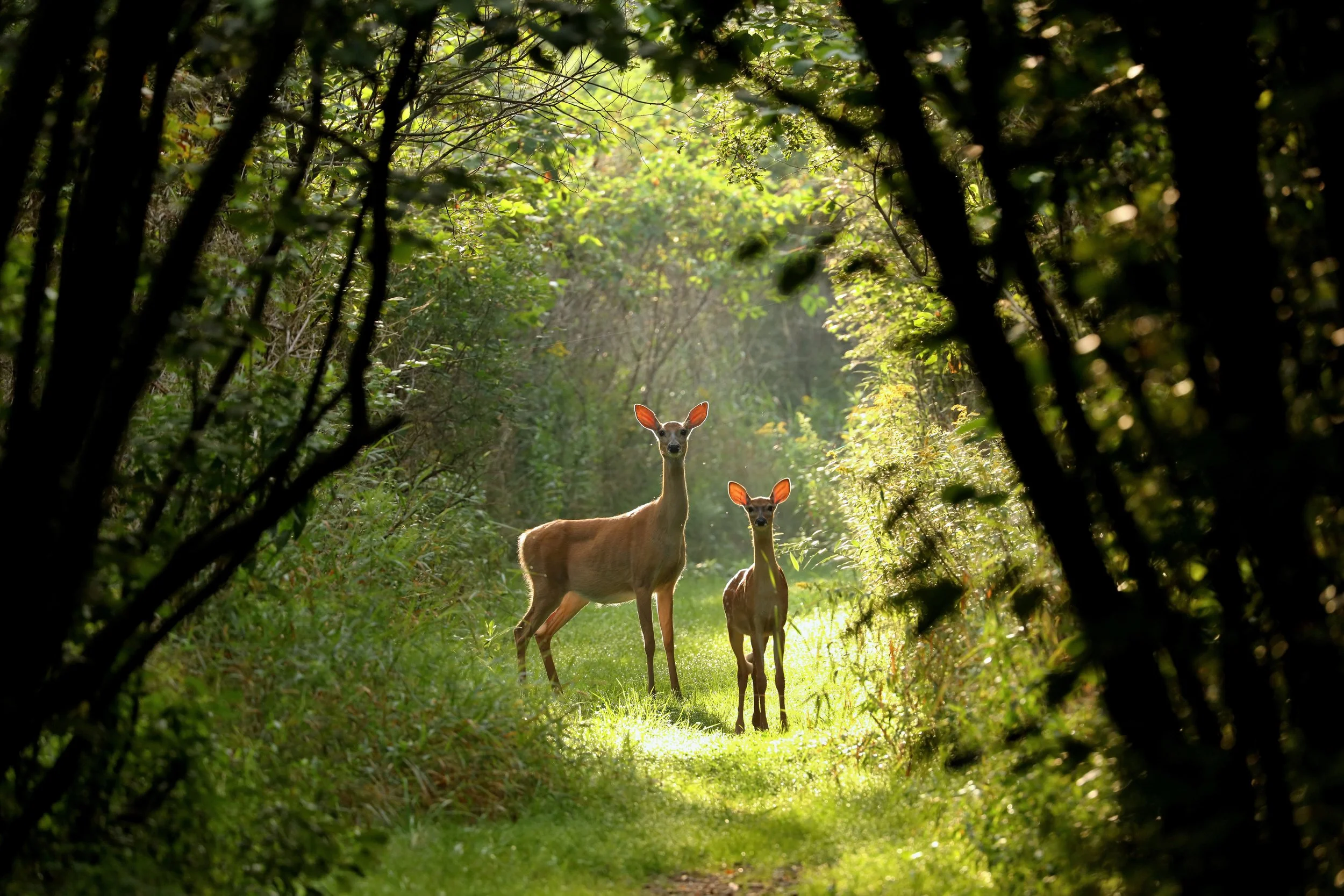
As herbivores, deer and rabbits eat plants and the easily accessible buds of young trees. However, they also nibble on invasive weeds opening ecological niches for plants and wildlife. Rabbits are also a valuable food source for many of the UK’s carnivores, too.
Their grazing can help to keep grass growth under control, an integral function that allows wild flowers establish and flourish. Rabbits’ burrowing and ground-scratching activity assists in seed germination and can then create havens where rare insects and flowers have the conditions to establish and thrive.
Wasps
According to the Natural History Museum, the world would be ‘overrun with spiders and insects’ if we did not have wasps. They consume around 14 million kilograms of insects during the summer months!
What’s more important is that they are considered to be apex predators, the predators that are at the top of the food chain. Their health can then, essentially, dictate the health of the rest of their food chain.
These are just some of the ways in which ‘pests’ contribute to natural and agricultural ecosystems. Pests are often crucial components of this diverse ecosystem function, and they should be included in our efforts to restore and rewild the planet.
Ways to work with pests
Preventing pests from causing damage by using creative land management methods, rather than trying to eradicate them, is a mindset shift that’s catching on. Increasingly, we’re discovering that there’s no way to completely eradicate landscapes of certain animals, insects or birds, nor would it be beneficial to do so. A biodiverse ecosystem is a healthy ecosystem, and one that is less likely to break down under the pressures of climate change.
The climate and biodiversity crises we are currently facing are, at least in part, a result of poor natural asset management. This needs to change for nature to recover and thrive.
Creative, natural pest management
The key to working around pests in a minimally harmful way is to be creative. In an article in Discover Wildlife, a senior curator of molluscs at the Natural History Museum, Jon Ablett, said:
“We breed vegetation that smells nice to [slugs]...We remove the weeds for them and we till the soil so it’s easier for them to move around...We might as well put up a neon sign saying: ‘Slugs! Get your free all-you-can-eat buffet here!’”
Other management strategies that work to make space for species, so they no longer act as pests, could include:
Planting trap-crops for pests to eat instead of crops. These could include varied hedges allowed to thicken to offer better food to deer or French marigold to attract slugs.
Making friends with your local barber! Deer are deterred by the smell of human hair so scattering your land with clippings can help usher them away from your young trees.
Encouraging natural predators that prey on the pests. Hedgehogs, for example, love slugs and can be encouraged by maintaining thick, continuous vegetation like hedges.
Constructing artificial perches for predatory and insectivorous birds, which has been observed to result in less crop damage from smaller birds and insects than those without these measures.
Implementing semi-natural habitat within and around farms, helping wildlife and humans to co-exist.
Companion planting - this involves creating multi-species plant communities which work to attract desirable insects and enhance natural pest control.
Build a pond – This can encourage wildlife such as frogs that can make a meal out of slugs, which is much better than using more malicious methods to get rid of molluscs.
Inclusion over exclusion – Wilding and biodiversity
Chemical pest control isn’t just harmful for pests... it’s harmful for people too. Working to accommodate pests rather than to remove them requires a little creativity, but we think it’s worth it when we see the flourishing plants and wildlife in the landscapes we manage.
At TreeSource, we include as many species as possible in our planting designs to account for all types of biodiversity, to let nature work its own wonders. Throughout the tree planting and growing process, we implement solutions to help animals, insects and birds co-exist harmoniously, including ensuring plentiful food sources for local flora and fauna.
Pests, or what we perceive as pests, are a challenge, but predominantly because we are creating environments that do not accommodate them. We can help nature to find the right equilibrium so that all the wonderful wildlife that wanders, walks, flutters or scuttles on your land can benefit the environment – without becoming pests!